Emmeline B. Woodward
Wells
February 29, 1828: Emmeline
Blanche Woodward was born in Petersham ,
Massachusetts
July 29, 1843: Emmeline married James Harvey Harris. After moving to Nauvoo their infant son
died. James Harvey Harris left Nauvoo to
find work but never returned. She
started to teach school so she had an income.
February 17, 1845: She married and became a plural wife of Newel K
Whitney. She crossed the plains with his
family. 5 years later after Newel died and
Emmeline needing an income she returned to teaching.
October 10, 1852: She became the wife of Daniel H. Wells. Together they had five daughters.
1876: President Brigham Young put Emmeline in charge of
a grain-saving program in which Relief Society sisters worked together to
procure and store grain. Over the years, Relief Society sisters were able to
share their wheat with those in need. The Relief Society also sold over 200,000
bushels of wheat to the U.S.
Emmeline and her counselors
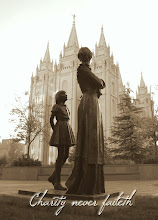
are the ones who came up with the Relief Society motto, “Charity never
faileth”. Within years of the motto,
World War 1 broke out and Emmeline urged the sisters to be kind to all and seek
a pure love of Christ for mankind. She
was a major part of the women’s suffrage movement.
In 1877: She became editor of the Woman’s Exponent, a LDS women
newspaper. For 37 years she helped women
to be heard around the country.
Emmeline was 82 years old
when she was called to be the 5th general president and she served
for 11 years. She outlived two of her
own children and died on April 29, 1921.
“It is [my] strongest desire that our young women of today be
made to comprehend the work of the early members who without the facilities of
the present time, comforted the sad and distressed, visited the widow and
fatherless, and were like ministering angels.”